The Mongol Empire was the largest contiguous empire at its greatest extent, and stretched from the Pacific Ocean to Eastern Europe and reshaped the course of history.
The Mongols were nomadic people from the Central Asian steppes known for their exception skill in horseback warfare, strict military discipline, and complex tribal organization. They practiced the Tengri religion and followed a legal system known as the Yassa, related to political and social affairs.
Genghis Khan
Genghis Khan (d. 1227) is known for his strategic leadership and brutal campaigns. He united the scattered Mongol tribes and was proclaimed Khan in 1206, because of which the empire expanded rapidly.
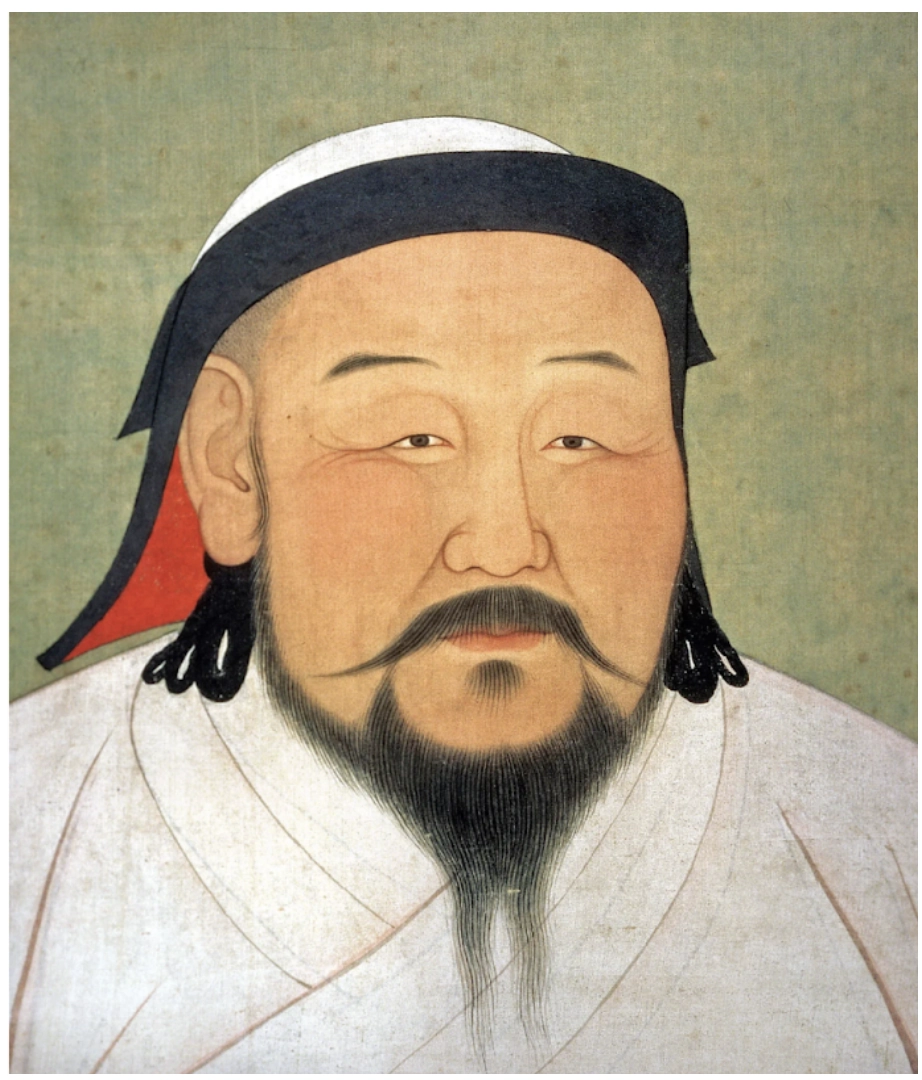
His Four Sons
Upon his death, he divided the empire among his four sons: Jochi, Chagatai, Ogedei, and Tolui. As a whole, Jochi got the western lands toward Russia, Chagatai got Central Asia, Ogedei got Mongolia and parts of northern China, and Tolui got Mongolia. It was Tolui’s son, Hulagu Khan, who would later lead the Siege of Baghdad.
Siege of Baghdad
The Mongol invasions of the 13th century swept through vast territories and in a matter of decades destroyed four Muslim dynasties: the Khwarazmians, the Seljuqs, the Ayyubids, and the Abbasids.
The most consequential was the sack of Baghdad in 1258. Baghdad was known as Madinat al Salam, the “City of Peace,” and was the intellectual and cultural heart of the Islamic world under the Abbasid Empire.
Hulagu Khan’s army besieged the city for over a week and unleashed hell upon its inhabitants and levelled much of its beauty. Many sources place the number of people massacred between 200,000 and 800,000. The Bayt al Hikma (House of Wisdom) contained hundreds of thousands of books and manuscripts, thrown into the Tigris River, making it run black for days, as well as running red for days with blood. The Abbasid Caliph, al Musta’sim, was executed and the Abbasid Caliphate ended.
Ayn Jalut
The Mongols advanced further until the Battle of Ayn Jalut occurred in 1260 when the Mamluk Sultan Qutuz achieved a decisive victory. It was fought near the place where David is believed to have slain Goliath.
Berke-Hulegu War
In 1262, Berke Khan who had converted to Islam and ruled the Golden Horde opposed his cousin Hulagu’s campaigns against Muslim cities, and went to war. This was the first split in the Mongol family after Genghis Khan whereby the holy cities including Makka, Madina and Jerusalem were protected from attack.
Conclusion
This brief study reveals how history can twist and turn by the intentions of various scholars, activists and political leaders. The descendants of three sons, the three western khanates, eventually became Muslim, besides the fourth, Yuan, which remained primarily Buddhist. The Siege of Baghdad terrorized the Muslims, with some estimating the Mongols to be Gog and Magog (Yajuj and Majuj) who were prophesied to appear at the end of time, but the final victory was for the believers after all.
References
Mongols - Britannica
Genghis Khan - Britannica
Conversion of Mongols to Islam - Britannica
Battle of Ayn Jalut - Britannica
Mongol Transition to Islam - Sacred Footsteps Website
Mongol Conquests - Wikipedia
Battle of Ayn Jalut - History of Islam Website
Islam & Mongols - Reddit Discussion
