Allama Hilli
Jamaluddin ibn Mutahhar al Hilli, widely known as Allama Hilli, stands as one of the foremost intellectuals in the history of Islamic scholarship. Born in the city of Hillah, Iraq, a major center of Shiʿi learning, Allama Hilli became recognized for his encyclopedic command of Islamic law, theology, philosophy, and grammar.
He came from a distinguished scholarly family. His father was Sadiduddin Hilli, and his uncle was the renowned jurist Muhaqqiq Hilli, a towering figure. Allama Hilli lived during a period marked by cultural and political transformation. He died in 726 AH (1325 CE) in his 70s and was laid to rest in Najaf, near the shrine of Imam Ali ibn Abi Talib.
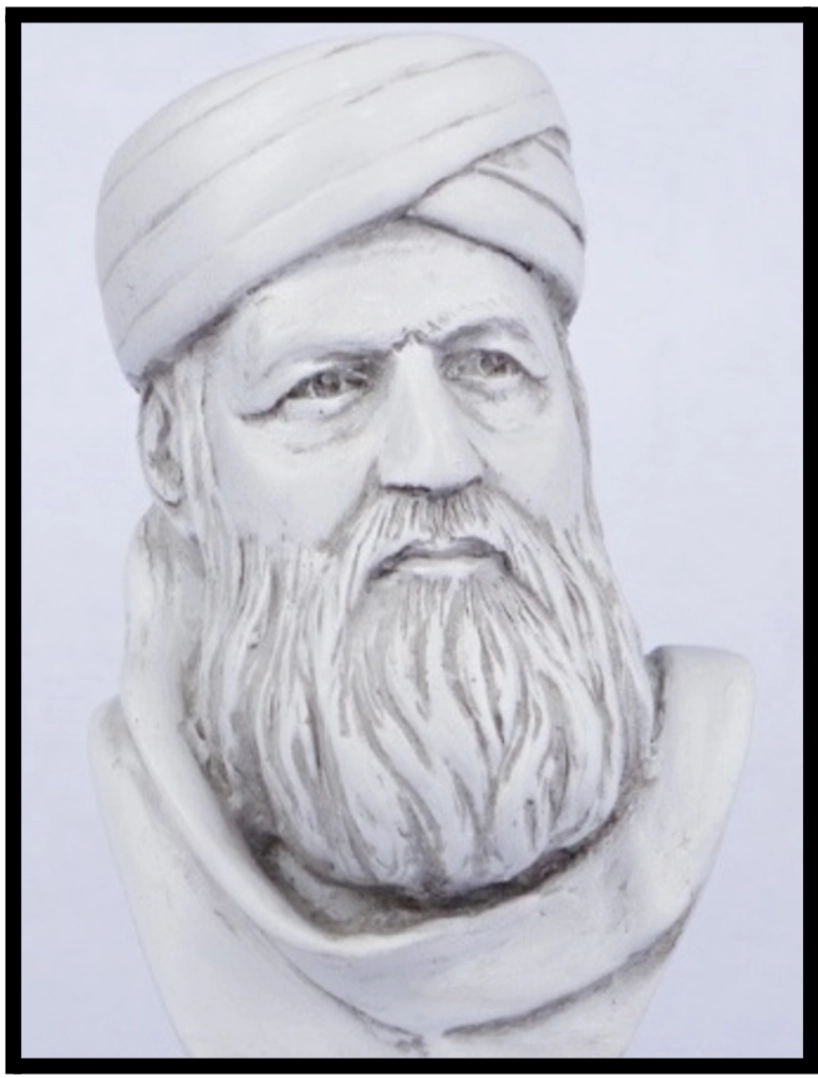
Berke Khan
Allama Hilli’s lifetime coincided with one of the most extraordinary religious transitions in world history, the conversion of the Mongols to Islam, a people who had destroyed much of the Muslim world only decades earlier.
The earliest Mongol convert was Berke Khan, ruler of the Golden Horde after his father Jochi. He promoted Islamicate ideals and patronized construction of religious institutions. He also replaced the Mongol Yassa with the Islamic Sharia.
Oljaitu Khan
Oljaitu’s conversion after Berke was significant. He was the eighth ruler of the Ilkhanid dynasty and the great grandson of Hulagu Khan. Initially baptized into Christianity due to his mother's faith, Oljaitu later adopted Buddhism, the traditional faith of many Mongols. He then converted to Sunni Islam, and finally, through the influence of Allama Hilli, embraced Twelver Shiʿism.
The Jurisprudential Case
One critical episode arose when Oljaitu sought to remarry a wife he had divorced three times. Legal scholars representing the Four Sunni Madhabs (Schools of Jurisprudence) unanimously ruled that such a reunion was impermissible. However, Allama Hilli drew upon the Ja’fari Madhab and argued that the divorce was invalid without the presence of two witnesses, which provided a legal basis for remarriage.
This moment impressed Oljaitu, and he went on to declare Twelver Shiʿism the official religion of his empire. He minted currency inscribed with the names of the Twelve Imams, around two centuries prior to the Shi’i rule of Safavids in Iran.
Writings & Contributions
Oljaitu invited Allama Hilli to his court around 709 AH (1309 CE). During his time in the royal court, Hilli was asked to author several theological works in support of Shiʿism, the most notable being Minhaj al Karama and Nahj al Haqq wa Kashf al Sidq.
Allama Hilli’s intellectual legacy helped define Shiʿi theology, legal theory, and hadith methodology for subsequent generations. Among his most influential texts are Kashf al Murad, a commentary on Nasiruddin Tusi’s Tajrid al I’tiqad; Bab Hadi Ashar, a concise theological treatise; Nihayat al Maram fi Ilm al Kalam, his most extensive work in theology; and Kashf al Yaqin, in praise of Imam Ali’s virtues.
Theology
Hilli generally aligned with the Basran Mutazila in theology, upholding the doctrine of human free will in opposition to Ashari determinism. He was also a leading proponent of the doctrine of Imamate, which he regarded as a fundamental tenet of Islam.
Ibn Taymiyya
The clash between Ibn Taymiyya (d. 1328) and Allama Hilli (d. 1325) has been studied extensively by academics. Allama Hilli’s Minhaj al Karama was an elucidation and defense of Shi’i doctrines, especially of the belief in Imamate, and was dedicated to Oljaitu. Ibn Taymiyya wrote Minhaj al Sunna, a rebuttal which directly engages with each point in the seven chapters. At times, Ibn Taymiyya digresses to discuss or condemn other denominations, beliefs and practices, which makes his work exponentially larger.
Upon learning of Ibn Taymiyya’s response, Hilli is reported to have said, “Had he understood what I meant, I would have responded to him.”
It is reported that toward the end of their lives, Allama Hilli and Ibn Taymiyya met on pilgrimage to Hajj, and had discussions in person.
Teachers
Allama Hilli’s teachers include Muhaqqiq Hilli (d. 1277), who was the uncle of Allama Hilli as well, Ibn Juhaym (d. 7/13th), whose name was Muhammad ibn Ali Asadi, Sayyid ibn Tawus (d. 1193), Sayyid Ahmad ibn Musa ibn Tawus Hilli (d. 1274), Nasiruddin Tusi (d. 1274), and Ibn Dawud Hilli (d. 1307).
Students
Allama Hilli’s students include his son, Fakhr al Muhaqqiqin (d. 1369), whose name was Muhammad ibn Hasan Hilli. He continued his father’s work and was known to be a powerful defender of the faith. Another student was Ibn Inaba (d. 1424), whose name was Sayyid Jamaluddin Ahmad ibn Ali Husayni.
Conclusion
Allama Hilli exemplifies the power of intelligence, knowledge and persuasion. Despite what had transpired in the political and social world, he lived to the fullest extent for what he believed, through his writings and opinions. He persuaded Oljaitu over to his version of Islam, along with the rest of the empire. He engaged in scholarly discussion and debate, despite some of his works being closer to polemics.
References
Sabine Schmidtke’s Allama Hilli and Shi’ite Mutazilite Theology - Theology
Britannica - Biography
None - By Sukidi Mulyadi
History of Allama Hilli - None
Books - None
Ibn Taymiyya and Allama Hilli - None
Debate - None
By Arsalan Rizvi - None
The Eleventh Chapter - None
Methodologies - None
None - None
None - None
None - None
Allama Hilli - Wikipedia Page
Allama Hilli - None
Biography - None
Ibn Taymiyyah - None
Alfayn by Allama Hilli - In Urdu
